Howard Gardner (1983) introduced the Theory of Multiple Intelligences (MI) in Frames of Mind: The Theory of Multiple Intelligences. Through this radically new way of seeing intelligence, Gardner challenged the traditional view that intelligence is a single, measurable ability reflected by IQ tests. Instead, he sought to explain the wide variety of human talents observed across cultures and throughout history.
Despite the influence the MI theory has had on educational curricula, many researchers have claimed it to be a neuromyth (Waterhouse, 2023), rather than an established scientific fact.
In this article, we will explore what Gardner’s theory was, its implications and whether modern neuroscience and psychology support it or not.
The Short Summary:
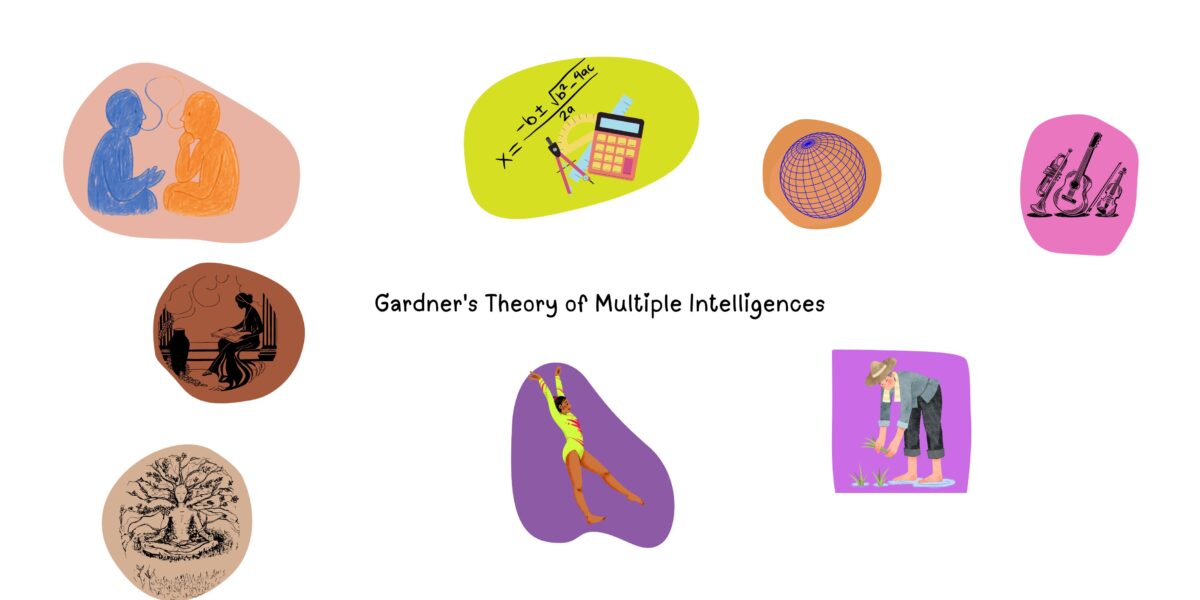
Howard Gardner proposed in 1983 that there are 7 (later 8 and then 9) capacities – resulting from an interaction between genetics, psychology and the environment – enabling us to perform various tasks. He called these capacities ‘intelligences’.
The intelligences include:
- Linguistic Intelligence
- Logical-Mathematical Intelligence
- Spatial Intelligence
- Musical Intelligence
- Bodily-Kinesthetic Intelligence
- Interpersonal Intelligence
- Intrapersonal Intelligence
- Naturalistic Intelligence (added later)
- Existential Intelligence
The theory of multiple intelligences has been widely influential in shifting public mindset on the utility of realizing factors that affect functioning outside of the g-factor. However, there has also been significant pushback from modern scientific research.
What Is Gardner’s Theory of Multiple Intelligences?
Gardner argued that intelligence consists of several relatively independent capacities instead of a single g factor. These capacities combine uniquely, enabling people to solve problems and create products valued within their cultural settings.
What Is an Intelligence According to Gardner?
Gardner defines an intelligence as a biopsychological potential to process information that can be activated within a cultural setting to solve problems or create products that are valued in that culture. This definition shifts the focus from intelligence as a fixed score to intelligence as a set of human capacities that develop through the interaction of biology, experience, and culture.
Two aspects of this definition are particularly important.
Characteristics of an Intelligence
First, Gardner emphasizes that intelligence is a potential rather than an achievement. A person may possess considerable intellectual potential without ever fully developing it because its expression depends on education, opportunity, motivation, and cultural support. Thus, intelligence should not be confused with academic success or occupational status.
Second, Gardner argues that intelligence is demonstrated through adaptive problem-solving and meaningful creation, not merely through answering test questions correctly. A scientist solving complex theoretical problems, a musician composing an original symphony, a dancer communicating ideas through movement, and a skilled negotiator resolving interpersonal conflict all display intelligence, even though their abilities differ substantially from one another.
C — Mixed evidence (core structural claims of the theory receive mixed empirical support, but its educational applications have demonstrated meaningful benefits in curriculum design and classroom instruction) (see evidence framework)
The Types of Intelligences According to Gardner’s Theory: The Eight (and Later Nine) Intelligences with Examples
Gardner (1983) initially proposed seven relatively independent intelligences in Frames of Mind. He later added naturalistic intelligence, bringing the total to eight, and subsequently discussed existential intelligence as a possible ninth intelligence, although he considered the evidence for its inclusion less conclusive than for the others.
Each intelligence represents a different way of processing information and solving problems. According to Gardner, individuals possess all of these intelligences to varying degrees, resulting in very unique intellectual profiles.
Linguistic Intelligence
Linguistic intelligence refers to the capacity to understand and effectively use spoken and written language. Individuals with strong linguistic intelligence are skilled at reading, writing, storytelling, persuasion, and learning languages.
Real-world Examples of High Linguistic Intelligence:
Writers, poets, journalists, lawyers, and public speakers. Bob Dylan is a noted song-writer, winning the Nobel Prize for Literature (1977) and could be considered as having high linguistic intelligence.
Logical-Mathematical Intelligence
Logical-mathematical intelligence involves systematic reasoning, pattern-recognition, solving abstract problems, and working with numbers and logical relationships. Theoretically, this intelligence is most aligned with scientific inquiry, mathematical thinking, and analytical problem-solving.
Real-world Examples of High Logical-Mathematical Intelligence:
Scientists, mathematicians, engineers, and computer programmers. Magnus Carlsen held the title of World Champion in Chess from 2013-2023 could be considered as having high logical-mathematical intelligence.
Spatial Intelligence
Spatial intelligence is the ability to perceive, manipulate, and mentally transform visual information. Using this intelligence, people can imagine objects from different perspectives, interpret maps, and visualize complex structures.
Real-world Examples of High Spatial Intelligence:
Architects, artists, designers, and pilots. In his activist artworks, Banksy exhibits high spatial intelligence, placing props and devising paintings that utilize a particular space effectively.
Musical Intelligence
Musical intelligence involves sensitivity to rhythm, melody, pitch, and tone. Individuals high in this intelligence can recognize musical patterns, compose music, perform instruments, or appreciate subtle differences in sound. Gardner regarded music as a distinct intellectual domain rather than merely an artistic talent.
Real-world Examples of High Musical Intelligence:
Singers, musicians, music producers and composers. Ludwig van Beethoven demonstrated exceptional musical intelligence by composing increasingly complex symphonies despite profound hearing loss, relying heavily on his internal representation of melody, harmony, and rhythm.
Bodily-Kinesthetic Intelligence
Bodily-kinesthetic intelligence refers to the ability to control body movements with precision and use physical actions as a source of creativity and problem-solving. Basically, this intelligence involves the synchronization of gross and fine motor functions.
Real-world Examples of High Bodily-Kinesthetic Intelligence:
Athletes, dancers, actors, surgeons, and craftspeople. Michael Jackson demonstrated extraordinary coordination, timing, and expressive movement, illustrating the bodily control that Gardner associated with bodily-kinesthetic intelligence.
Interpersonal Intelligence
Interpersonal intelligence is the capacity to understand other people’s emotions, intentions, motivations, and behaviors. It enables effective communication, cooperation, leadership, and conflict resolution.
Real-world Examples of High Interpersonal Intelligence:
Teachers, therapists, managers, negotiators, and political leaders. Nelson Mandela displayed high interpersonal intelligence, famously negotiating the end of the Apartheid in South Africa, between 1985-1993.
Intrapersonal Intelligence
Intrapersonal intelligence involves understanding oneself, including one’s emotions, motivations, strengths, and limitations. According to Gardner, self-awareness enables individuals to regulate their behavior, make informed decisions, and pursue personally meaningful goals.
Real-world Examples of High Intrapersonal Intelligence:
Philosophers, psychologists, and reflective individuals. Mahatma Gandhi famously documented his growth through introspection in his autobiography, The Story of My Experiments with Truth.
Naturalistic Intelligence
Gardner formally integrated naturalistic intelligence in 1999, 16 years after the publication of Frames of Mind. describing it as the ability to recognize, classify, and understand patterns in the natural world. People with strong naturalistic intelligence readily identify plants, animals, and environmental relationships, making this intelligence particularly valuable in fields such as biology, ecology, agriculture, and conservation.
Real-world Examples of High Naturalistic Intelligence:
Botanists, zoologists, agriculturalists and farmers. George Washington, before his presidency of the US, pioneered crop rotation methods as a tobacco and wheat farmer.
Existential Intelligence (the 9th ‘Hypothetical’ Intelligence)
Gardner (1999) suggested the possibility of existential intelligence. He defined it as the capacity to reflect upon profound questions concerning existence, meaning, mortality, and humanity’s place in the universe. While he considered this proposal intellectually compelling, he acknowledged that the available evidence did not yet justify recognizing it as a fully established intelligence.
The Eight Criteria Gardner Used to Identify an Intelligence
To distinguish intelligences from talents, personality traits (such as the big 5 traits), or learned skills, Gardner proposed several criteria drawn from psychology, neuroscience, evolutionary biology, anthropology, and studies of exceptional individuals.
These include
- evidence of selective impairment following brain damage,
- the presence of prodigies or savants,
- distinct core cognitive operations,
- a unique developmental trajectory,
- evolutionary significance,
- support from experimental psychology
- support from psychometric research, and
- the capacity to be expressed through symbolic systems such as language, music, or mathematics.
Collectively, these criteria formed Gardner’s framework for clearly laying out what intelligence truly is.
How Gardner’s Theory Explains Differences Between Children
Rather than assuming that intelligence varies only in quantity, Gardner proposed that children differ in the configuration of their intelligences. While every child possesses all of the intelligences, each develops a distinctive profile shaped by biological predispositions, developmental experiences, cultural influences, and educational opportunities. Consequently, two children with similar academic performance may demonstrate very different intellectual strengths. One child may excel in storytelling and writing, while another shows exceptional musical sensitivity or an intuitive understanding of social relationships.
Gardner also argued that traditional schooling tends to reward linguistic and logical-mathematical abilities more heavily than other forms of intelligence. As a result, children whose strengths lie in music, movement, spatial reasoning, or interpersonal understanding may be viewed as average or underachieving, even though they possess significant intellectual capacities in domains that conventional assessments rarely measure.
Importantly, Gardner did not suggest that every child learns in exactly the same way or that each intelligence develops independently of experience. Instead, he viewed intellectual development as the interaction of biological potential and environmental opportunity. Education, practice, motivation, and cultural values all influence whether a child’s intellectual potential is realized. A supportive environment can strengthen emerging abilities, whereas limited opportunities may prevent certain intelligences from reaching full expression.
From Gardner’s perspective, the goal of education is therefore not to rank children according to a single measure of intelligence but to recognize their diverse intellectual profiles and provide opportunities for each child to develop their strengths while supporting areas that require further growth.
Educational Implications of Gardner’s Theory of Intelligence
By proposing that students possess different intellectual strengths, the theory encourages educators to move beyond a one-size-fits-all approach to teaching and assessment. To be more specific, it calls for the diversification of strengths (or what strength really means) and assessments, devising individually tailored educational plans, and encouraging students to contribute not just academically but artistically, athletically and philosophically (along with many other domains of human ability).
Recognizing Diverse Strengths
Traditional classrooms often place the greatest emphasis on reading, writing, and mathematical reasoning. Gardner’s theory suggests that these abilities represent only part of human intelligence. Students who struggle with conventional academic tasks may nevertheless demonstrate exceptional abilities in music, visual reasoning, physical movement, social interaction, or understanding the natural world. Recognizing these strengths allows educators to view students more holistically rather than defining their potential solely through examination scores.
Providing Multiple Paths to Learning
Because students differ in their intellectual profiles, Gardner argued that important concepts should be presented in more than one way. A scientific principle, for example, might be explained through language, illustrated visually, demonstrated through hands-on activities, or explored through collaborative discussion. Presenting material through multiple approaches increases the likelihood that students with different strengths will meaningfully engage with the content.
Encouraging Individualized Education
Gardner’s framework supports the idea that education should be responsive to individual differences rather than expecting every student to excel in identical ways. Instead of asking whether a child is intelligent, educators are encouraged to ask how that child is intelligent. This perspective shifts attention toward identifying students’ strengths while helping them develop areas that require further support.
Broadening Assessment
Gardner also questioned the assumption that standardized tests provide a complete picture of intellectual ability. If intelligence can be expressed through multiple domains, then educational assessment should likewise include a broader range of performances. Projects, portfolios, artistic work, practical demonstrations, collaborative tasks, and real-world problem solving may reveal abilities that conventional examinations fail to capture.
Preparing Students for Diverse Contributions
A broader understanding of intelligence also changes how educational success is defined. Rather than preparing every student for the same academic pathway, Gardner’s perspective encourages schools to cultivate a wide range of human capabilities. By supporting diverse intellectual strengths, education can help students develop the knowledge and skills needed to contribute to society in different but equally valuable ways.
Ultimately, Gardner’s educational message is not that every child should receive an entirely different curriculum, nor that traditional academic abilities are unimportant. Instead, he argues that effective education recognizes the diversity of human intellect, provides multiple opportunities for learning, and values the many ways in which students can demonstrate understanding.
What Does Modern Science Say About the Multiple Intelligences Theory
Strengths of Gardner’s Theory
1. MI Theory Broadened the Concept of Intelligence
Perhaps Gardner’s greatest contribution was philosophical rather than psychometric. Before Frames of Mind, intelligence was largely viewed through the lens of IQ and academic performance. Gardner opened new ways of thinking about intelligence in domains which were not thought of as indicators of intelligence. Hence, MI theory fueled the movement towards strengths-based models of neurodiversity (Armstrong, 2012) which helped highlight the various strengths of neurodivergent individuals (including people with high-functioning autism and ADHD)
Think about domains like music, social relationships, artistic creation, and physical movement.
The theory encouraged psychologists and educators to appreciate the diversity of human abilities rather than equating intelligence solely with linguistic and mathematical reasoning.
2. MI Theory Changed Educational Practice
The theory has been especially influential in education. By recognizing that students possess different intellectual strengths, Gardner encouraged teachers to diversify instructional methods, create richer learning experiences, and evaluate students using more than standardized examinations. This shift helped move educational practice toward more student-centered and inclusive approaches. According to a systematic review and meta-analysis by Aydin (2019), the usage of MI-based educational practices have had a significantly positive influence on students’ academics.
Interestingly, for the MI-based practices to have the most effect, the relationship of the students to these lessons, their geographical location and the academic year seem to matter the most. This means that tailoring the practices according to certain demographics of the students along with increasing rapport could lead to even further success of such programs.
The MI theory not only allows for these improvements, it deeply encourages them!
3. MI Theory Stimulated Research on Human Abilities
Even among researchers who disagree with Gardner’s conclusions, the theory prompted valuable discussions about the nature of intelligence, brain specialization, creativity, expertise, and talent. The theory of emotional intelligence, which now has robust empirical support for it, was based on the interpersonal and intrapersonal intelligences identified in MI theory (Salovey et al., 1990). Thus MI theory could incorporate ways of improving emotional intelligence straight into the curricula of students!
All-in-all, the model developed by Gardner effectively paved the way for new intelligence research to reconsider long-standing assumptions and inspired decades of empirical research examining the structure of cognitive abilities.
Weaknesses of Gardner’s Theory
1. Gardner’s Own Critique of the Theory
Although Gardner (1983) argued that intelligence is multidimensional, he did not present the Theory of Multiple Intelligences as a finished or unquestionable model. Throughout Frames of Mind, he acknowledged that the theory was exploratory and invited further investigation rather than offering a definitive classification of human intelligence.
One of Gardner’s (1983) central observations was that no classification of intelligence can ever be entirely objective. The identification of an intelligence depends on the criteria used to define it, the available scientific evidence, and the cultural value placed on particular human abilities. Thus, his list of intelligences should not be regarded as fixed or exhaustive. As new findings emerge from psychology, neuroscience, and other disciplines, the framework may require revision.
Different intelligences rarely operate in complete isolation. Although Gardner (1983) argued that each intelligence possesses its own developmental history and core operations, he mentions in his original Frames of Mind book that real-world activities usually involve several intelligences working together. Writing a novel, for example, primarily depends on linguistic intelligence but may also require interpersonal insight, intrapersonal reflection, and even spatial imagination.
Likewise, a scientist may rely on logical reasoning while simultaneously drawing upon linguistic abilities to communicate ideas.
Hence, Gardner viewed the intelligences as relatively autonomous rather than entirely independent.
Another limitation Gardner (1983) recognized concerns the difficulty of drawing clear boundaries between intelligences. Human cognition is highly complex, and some abilities naturally overlap. Consequently, deciding whether a particular capacity represents a distinct intelligence or merely a component of another intelligence is not always straightforward. Gardner therefore relied on various sources of evidence rather than a single defining characteristic when proposing each intelligence.
Finally, he emphasized that his theory should not be interpreted as a rejection of traditional intelligence (Gardner, 1983). He did not deny the importance of linguistic and logical-mathematical abilities or argue that IQ tests are entirely without value. Instead, his goal was to broaden the concept of intelligence so that it better reflects the diverse ways in which people solve problems and contribute to society.
Rather than claiming to have settled the debate about intelligence, Gardner presented his theory as an alternative framework intended to encourage psychologists, educators, and researchers to reconsider long-held assumptions about what it means to be intelligent.
2. Research Does Not Support Completely Independent Intelligences
One of Gardner’s central claims is that the intelligences are relatively independent of one another. If this is true, individuals who perform well in one intelligence should not necessarily perform equally well in others.
However, empirical studies have generally found the opposite.
In a study comparing Gardner’s Multiple Intelligence Assessment (MIA) with a conventional aptitude battery (BAD), Almeida et al. (2010) found that performance across the different intelligences was largely explained by two broad underlying factors rather than eight independent intelligences. Moreover, a traditional general cognitive factor accounted for approximately 46.5% of the total variance across both assessments. These findings suggest that although intelligence may not be reducible to a single ability alone, Gardner’s proposed fragmentation into eight distinct intelligences is also not strongly supported.
Consequently, the evidence appears to favor a more hierarchical view of intelligence, where broad cognitive abilities remain substantially interconnected rather than functioning as independent systems.
3. Most Cognitive Intelligences Appear to Reflect General Intelligence
Additional evidence comes from Visser et al. (2006), who developed objective performance-based measures corresponding to Gardner’s proposed intelligences.
Their findings showed that linguistic, logical-mathematical, spatial, naturalistic, and aspects of interpersonal intelligence were all strongly correlated with a common cognitive factor. Rather than functioning independently, these domains appeared to reflect general reasoning ability.
Only the more sensory, motor, and personality-oriented domains (such as musical and bodily-kinesthetic intelligence) showed weaker relationships with this common factor.
These results suggest that Gardner may have grouped together two different kinds of human characteristics: general cognitive abilities, which remain substantially interconnected, and specialized talents or skills, which are more domain-specific.
4. Gardner’s Definition of Intelligence May Be Circular
A more fundamental criticism concerns the way Gardner defines intelligence itself.
Psychologist Klein (1993) argued that Gardner’s explanation risks becoming circular. For example, suppose someone asks why a child is an exceptional dancer. Gardner’s theory might answer that the child possesses high bodily-kinesthetic intelligence. Yet bodily-kinesthetic intelligence is itself identified by excellence in activities such as dancing, athletics, or skilled movement.
The explanation therefore risks saying little more than:
The child dances well because they possess high dancing intelligence.
Rather than independently explaining performance, the intelligence is inferred from the very behavior it is intended to explain.
Klein (1993) further argued that Gardner often treats observed abilities as evidence for separate intelligences without sufficiently demonstrating that these represent distinct underlying psychological mechanisms. As a result, critics contend that the theory sometimes relabels abilities instead of explaining why they exist.
Overall Evaluation
Gardner’s Theory of Multiple Intelligences fundamentally changed how educators think about learning and individual differences. Its greatest contribution lies in expanding the concept of intelligence beyond traditional IQ and highlighting the diverse ways people can solve problems and contribute to society.
Nevertheless, empirical research has provided only limited support for Gardner’s central claim of independent intelligences. Psychometric studies consistently identify broad cognitive factors underlying many of Gardner’s proposed intelligences, while conceptual analyses question whether some of the intelligences function as explanatory constructs rather than descriptive labels.
This, however, does not take away from the enormous benefits that can be gained by implementing the MI theory into curricula. A quasi-experimental study, for example, found that incorporating ability-based dissemination of information (based on the strengths of the individual students), encouraging reflective thinking (a technique that targets existential intelligence as per MI theory) – among other applications of MI in lessons – could significantly improve educational outcomes (particularly as it related to attention to the students’ diverse capacities) (Winarti et al., 2019).
For these reasons, many psychologists regard Multiple Intelligences as an influential educational framework rather than a scientifically established theory of the structure of human intelligence.
Conclusion
Howard Gardner’s Theory of Multiple Intelligences challenged the traditional view that intelligence is a single, measurable ability by proposing that people possess multiple forms of intellectual competence. The theory has had a lasting influence on education, encouraging teachers to recognize diverse strengths and adopt more inclusive approaches to learning. However, empirical research has not consistently supported Gardner’s claim that these intelligences function as distinct and independent cognitive systems. Today, the theory is best viewed as a valuable educational framework that broadens our understanding of human potential, while its claims about the structure of intelligence remain the subject of ongoing scientific debate.
References
- Almeida, L. S., Prieto, M. D., Ferreira, A. I., Bermejo, M. R., Ferrando, M., & Ferrándiz, C. (2010). Intelligence assessment: Gardner multiple intelligence theory as an alternative. Learning and Individual Differences, 20(3), 225–230. https://doi.org/10.1016/j.lindif.2009.12.010
- Armstrong, T. (2012). Neurodiversity in the classroom: Strength-based strategies to help students with special needs succeed in school and life. Ascd.
- Aydin, H. (2019). The effect of multiple intelligence (s) on academic success: A systematic review and meta-analysis. EURASIA Journal of Mathematics, Science and Technology Education, 15(12), em1777. https://doi.org/10.29333/ejmste/109008
- Gardner, H. (1999). Intelligence reframed: Multiple intelligences for the 21st century. Basic Books.
- Gardner, H. (1983). Frames of mind: The theory of multiple intelligences. Basic Books.
- Klein, P. D. (1997). Multiplying the problems of intelligence by eight: A critique of Gardner’s theory. Canadian Journal of Education, 22(4), 377–394. https://doi.org/10.2307/1585790
- Salovey, P., & Mayer, J. D. (1990). Emotional intelligence. Imagination, cognition and personality, 9(3), 185-211. https://doi.org/10.2190/DUGG-P24E-52WK-6CDG
- Visser, B. A., Ashton, M. C., & Vernon, P. A. (2006). Beyond g: Putting multiple intelligences theory to the test. Intelligence, 34(5), 487–502. https://doi.org/10.1016/j.intell.2006.02.004
- Waterhouse L. (2023). Why multiple intelligences theory is a neuromyth. Frontiers in psychology, 14, 1217288. https://doi.org/10.3389/fpsyg.2023.1217288
- Winarti, A., Yuanita, L., & Nur, M. (2019). The effectiveness of multiple intelligences based teaching strategy in enhancing the multiple intelligences and Science Process Skills of junior high school students. JOTSE: Journal of Technology and Science Education, 9(2), 122-135.

I am a Clinical Psychologist and a Lecturer of Psychology at Government College, Renala Khurd. Currently, I teach undergraduate students in the morning and practice psychotherapy later in the day. On the side, I conjointly run Psychologus and write regularly on topics related to psychology, business and philosophy. I enjoy practicing and provide consultation for mental disorders, organizational problems, social issues and marketing strategies.
- M Abdullah Qureshi

- M Abdullah Qureshi

- M Abdullah Qureshi

- M Abdullah Qureshi