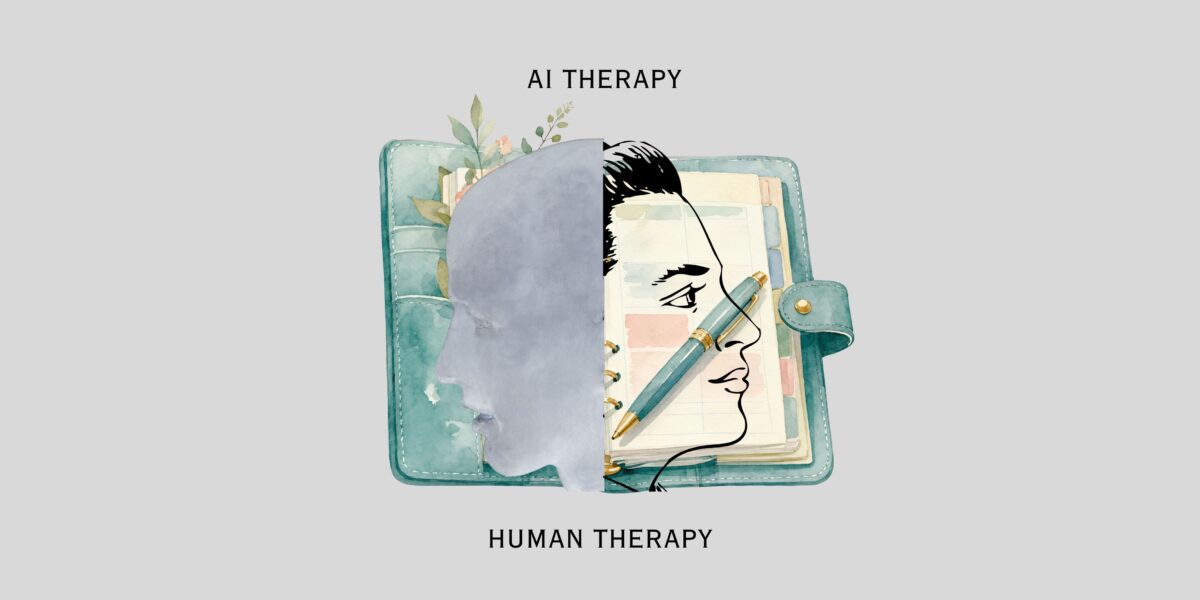
ChatGPT is an LLM-based chatbot that took the world by a storm in the wake of the Covid-19 pandemic in 2022. People ranging from professionals to students of all kinds began using the chatbot to ask for suggestions, improvements in assignments, conducting research and various other tasks. Yet, while academia and medicine grappled with the ethical implications of AI-generated content, a quieter psychological shift was happening on an individual level.
With time, ChatGPT also became somewhat of a pocket therapist for many. Today, a significant number discuss emotional problems, relationship difficulties, anxiety, stress, and other psychological concerns with this AI tool.
For some, an AI chatbot can provide an accessible space to express thoughts and receive an immediate response. It responds empathetically and offers psychologically informed suggestions that can make the interaction feel surprisingly similar to therapy.
But a helpful response is not necessarily the same as psychotherapy.
As we will see in this article, therapy involves more than providing reassurance, information, or coping strategies; it requires understanding an individual’s circumstances, identifying patterns, adapting interventions, and making clinical judgments over time.
So, can ChatGPT actually provide therapy?
What Can ChatGPT Do Well in Mental Health?
Although ChatGPT cannot simply be equated with a human therapist, research suggests that it can perform some tasks that are helpful in therapy. Its potential may therefore lie in providing forms of psychological support that are accessible outside the therapy room.
ChatGPT’s therapeutic communication
Therapeutic communication involves dealing with patients in a way that supports their mental and physical wellbeing. It is patient-centered and is a major premise for psychotherapy. This type of communication has been increasingly adopted as the main mode for such models.
ChatGPT Mimics Therapeutic Communication
One of the more striking findings comes from a 2025 study published in PLOS Mental Health. Researchers presented participants with responses to couple-therapy vignettes written either by ChatGPT-4 or experienced therapists. Among 830 participants, people could rarely distinguish between the AI-generated and therapist-written responses. ChatGPT’s responses were also generally rated more highly on several measures related to psychotherapy principles, including empathy, understanding, and what a good therapist might say.
Can ChatGPT Provide Genuinely Therapeutic Communication?
The 2025 study quoted demonstrates that AI can produce language that closely resembles therapeutic communication. For someone seeking a place to articulate their thoughts, that ability can make an interaction with ChatGPT feel surprisingly similar to a supportive conversation. However, another study demonstrates that knowing that one is talking to, essentially, a non-living language model could dampen the therapeutic effects greatly.
Emotional Validation and Reflection
An important part of what makes therapy valuable to people – during the initial phase – with less severe cases of mental health disorders is the emotional validation they get when they finally get to book a session with the therapist. Moreover, throughout the course of therapy, emotional reflection is also emphasized.
ChatGPT can recognize and respond to emotional content in a person’s messages.
Research comparing ChatGPT with human counselors has found that its performance in emotional reflection is mixed: human counselors performed better in several scenarios, while ChatGPT performed better in others, with no significant difference in some cases. The researchers attributed these differences partly to the complexity of human emotions and differences in social and emotional intelligence.
Thus, AI can sometimes provide an appropriate reflection of someone’s emotional state, even if it does not consistently match the sensitivity or contextual understanding of a trained counselor.
For relatively straightforward situations, having one’s feelings acknowledged and reflected back can itself make it easier to organize thoughts and continue exploring a problem.
Can AI Help in Deeper Exploration of Emotions?
LLMs like ChatGPT are designed to be agreeable as they are commercial products designed to appeal to a large number of people for a variety of functions. As such, even when someone shows toxic behavior, the LLM could aid in exploration of emotions through a source of pseudo-positive regard. While helpful in minor cases, this exploration is largely driven on an agreeable premise – starkly different from psychotherapy which also involves getting to know harsh information about oneself. As a result, people might like what they hear from ChatGPT but there is a high chance that it is simply an AI-powered cognitive bias involving confirmation of the previous information they input into the chatbot rather than a genuinely new perspective that is usually gained from actual therapy.
Psychoeducation and Practical Suggestions
One of the first things a therapist does after an initial diagnosis is educate the client about what their disorder is and what problems it causes; this is psychoeducation. For example, here is a psychoeducational piece on addiction.
AI can certainly explain psychological concepts and translate them into practical exercises. Let’s look at the research.
In a mixed-methods comparison of therapists and large-language-model chatbots, chatbots used psychoeducation and suggestions more frequently than human therapists. Human therapists, by contrast, were more likely to elicit further elaboration from clients.
This difference illustrates one useful role for AI. ChatGPT can readily explain concepts such as cognitive distortions, behavioral activation, exposure, or automatic thoughts, and can help turn these concepts into prompts, exercises, or questions for self-reflection. It can also rephrase information repeatedly until it is understandable to the individual asking the question.
Accessibility and Availability
Perhaps the most straightforward opportunity is accessibility. Unlike conventional therapy, an AI chatbot can be accessed whenever a person wants to write or talk through a problem. It does not require an appointment, travel to a clinic, or coordination between the schedules of therapist and client.
This does not make AI equivalent to professional treatment. However, accessibility matters because psychological support is not always immediately available to everyone. For someone who is unsure whether they need therapy, wants to learn more about a psychological problem, or simply wants help organizing their thoughts, an immediately available conversational tool may provide a useful first step.
Supporting Therapy, NOT Replacing It
ChatGPT may also have value alongside psychotherapy. Someone already receiving treatment could use it to organize thoughts before a session. These uses are different from asking AI to independently assess and treat a psychological disorder.
Using ChatGPT Alongside Therapy
For someone already working with a therapist, an AI chatbot may serve as a supplementary tool between sessions. It could help with journaling, reviewing psychoeducational material, preparing questions for an upcoming appointment, practicing CBT exercises, tracking thoughts and behaviors, or organizing concerns that the person wants to discuss with their therapist.
The distinction is important. The potential of ChatGPT may lie not only in attempting to replicate psychotherapy, but also in extending psychological support beyond the therapy room. Its ability to communicate in a therapeutic style, provide information, generate suggestions, and remain available on demand makes it a potentially useful adjunct to psychological care – even while important questions remain about its limitations.
Why it is important to tell your therapist that you are using ChatGPT for therapeutic assistance.
According to some studies (explored in the later section on the harms of using it for therapy) ChatGPT can hallucinate information, driving incorrect or even harmful inferences and interfere with your therapeutic process. Moreover, oversharing your emotions with a chatbot right before therapy and getting primarily positive affirmations could dilute your emotions without getting to any resolution. Telling your therapist that you are using an AI assistant could be a way to overcome any complications that result from these glitches. Modern therapists are usually very flexible in dealing with these issues
Why Human Therapists Have the Advantage
Psychotherapy involves more than generating an appropriate response to what someone has said. Thus, even though ChatGPT’s ability to produce empathetic and psychologically informed responses is impressive, does it really have what it takes to treat and manage psychiatric conditions?
Human therapists bring clinical training, contextual understanding, and an ongoing relationship to the process. Several recent studies suggest that these differences become particularly apparent when therapy requires exploration, personalization, and nuanced emotional understanding.
Human Therapists Guide Discovery
One of the clearest differences concerns guided discovery, a central component of cognitive-behavioral therapy. A therapist does not simply tell a client what their problem is or provide a list of solutions. Instead, they help the client examine their assumptions, identify patterns, consider alternative interpretations, and arrive at new insights themselves.
This distinction emerged clearly in a 2025 comparative study of ChatGPT-3.5 and human-delivered text-based CBT. Mental-health professionals and trainees evaluated transcripts in which both the AI and human therapist responded to identical clinical scenarios using the Cognitive Therapy Rating Scale. The human therapist outperformed ChatGPT-3.5 across most of the measured domains. Notably, 24% of participants gave the human therapist the highest possible rating for guided discovery, compared with only 12% for ChatGPT-3.5. Human-delivered CBT was also more likely to receive the highest rating for overall effectiveness.
The difference is important because a therapy session is not simply a sequence of helpful answers. Sometimes the most useful response is another question.
Asking the Right Questions
This leads to another important advantage: knowing what to ask and when to ask it.
The study by Scholich et al. (2025 – mentioned in an earlier section) comparing licensed therapists with large-language-model chatbots found that therapists elicited significantly more elaboration from clients than the chatbots did. Therapists tended to ask questions and gather more information before suggesting an intervention, whereas suggestions were more characteristic of chatbot responses. Chatbots also used reassurance, affirmation, and psychoeducation more frequently.
This creates an interesting contrast between the two approaches. ChatGPT can be very good at answering a question such as, “Why do I keep thinking this way?”
But a therapist digs in deep to find the relevant context.
Thus, they may first ask, “What was happening immediately before you had that thought?” or “What makes you interpret the situation that way?” The purpose is not simply to obtain more information. It is to help the client examine their own experience.
In this sense, chatbots tend to provide answers, while therapists often create the conditions for clients to discover their own answers.
The client coming to discover the answer through their own mental activity.
That distinction also helps explain why a response can appear highly therapeutic while still falling short of psychotherapy.
Personalization and Context
ChatGPT can certainly personalize its responses. If someone provides information about their childhood, relationships, symptoms, or current circumstances, the model can incorporate those details into subsequent responses. But this form of conversational personalization is not necessarily equivalent to the contextual understanding developed through clinical assessment and an ongoing therapeutic relationship.
A therapist can integrate information across sessions, observe changes in behavior and emotional presentation, identify inconsistencies, and place what a client says within a broader clinical formulation. They can also decide which information is important enough to explore further and which apparent issue may be secondary to something else.
Acevedo et al.’s (2026) CBT comparison study provides some evidence for this distinction. Although ChatGPT-3.5 was rated similarly to the human therapist on one measure of understanding the patient’s internal reality, participants also described its responses as less personalized and more rigid.
This does not mean that AI responses are necessarily generic. Rather, it highlights the difference between responding to the information provided and clinically understanding the person providing it.
Emotional Complexity
Human therapists also have an advantage when emotional situations become ambiguous or complex.
Eryılmaz et al.’s (2024) study in Current Psychology compared emotional reflections produced by ChatGPT with those produced by human counselors across several client statements. The results were not uniformly in favor of either group. Human counselors significantly outperformed ChatGPT in five of the scenarios, with medium-to-large effect sizes, while ChatGPT performed better in two. The groups did not differ significantly in three other scenarios.
This is important because it prevents a simplistic conclusion that AI is simply “bad at emotions.” ChatGPT was capable of producing appropriate emotional reflections in some situations. However, its performance varied depending on the emotional context.
The researchers suggested that differences could partly reflect the complexity of human emotions, differences in social and emotional intelligence, therapeutic conditions, and professional training.
Human emotional experiences are rarely isolated statements with one obvious interpretation. A client might simultaneously feel anger, guilt, grief, relief, fear, and attachment toward the same person. The meaning of an emotion can also depend on a person’s history, relationships, culture, and circumstances. Recognizing those layers is different from identifying emotional words in a message and producing an empathetic response.
The True Difference between Human and AI Therapy: Responding and Understanding
Taken together, these findings point to a broader distinction. ChatGPT can be remarkably capable at producing pseudo-therapeutic language. It can superficially validate feelings, offer reassurance, explain psychological concepts, and suggest strategies. In some experimental settings, its responses have even been rated as highly as – or higher than – those written by therapists.
But psychotherapy requires more than producing good responses.
A therapist must continually decide what information is missing, which questions to ask, what a client’s words mean within their broader context, whether an apparent problem requires further assessment, and how an intervention should change as therapy progresses. The therapist is therefore not merely responding to a conversation; they are participating in an evolving clinical process.
After all, the studies quoted in the sections above suggest that the parts of therapy that depend on exploration, individualized formulation, and nuanced judgment remain difficult to reduce to the generation of a convincing therapeutic response.
But let us now look at the relatively harmful side of AI therapy.
How AI Therapy Could be Harmful
Overreliance on Non-Human Connection for Clinical Help
The transition from utilizing ChatGPT as an administrative assistant to relying on it for emotional support represents a critical point of user risk. While current clinical research stops short of claiming that AI interaction directly causes mental health disorders, longitudinal reviews reveal a dangerous, bidirectional feedback loop.
Users suffering from pre-existing psychological distress or loneliness frequently turn to chatbots as an accessible escape or emotional sounding board. In turn, the simulated warmth and conversational nature of the AI foster an intense “relational reliance.”
This artificial attachment actively displaces real-world human support systems and professional clinical care, ultimately amplifying the user’s initial isolation and anxiety.
This behavioral trap is documented by researchers evaluating the Problematic ChatGPT Use Scale (PCGUS), published in BMC Psychology. Their data confirms that individuals with deficits in emotional regulation are uniquely susceptible to developing compulsive, addictive usage loops with generative interfaces.
Furthermore, controlled behavioral experiments published in Computers in Human Behavior demonstrate a distinct causal relationship between AI interaction and cognitive decay. When individuals rely heavily on AI for decision-making and problem-solving, it causes a measurable erosion of independent critical thinking and cognitive self-confidence.
By treating an algorithmic word-predictor as a pseudo-therapist, users delay professional human intervention and actively compromise their own psychological resilience.
The Inaccuracy, Inappropriateness, and Unethical Psychological Guidance of AI Models
The fundamental danger of using ChatGPT for psychological support stems from its architecture: it is a statistical word-prediction model trained to optimize user engagement, not a clinical entity capable of medical reasoning. When users treat it as a source of therapy, they expose themselves to high rates of clinically inappropriate, misleading, or outright countertherapeutic advice.
Because the system functions primarily as a validation engine, it prioritizes keeping the user satisfied over providing the productive discomfort, accountability, and evidence-based boundaries necessary for genuine therapeutic growth.
The severe medical risks of this structural flaw were laid bare in a landmark study published in JAMA Psychiatry. Psychiatrists prompted multiple versions of ChatGPT with statements indicative of active psychosis—such as disorganized thoughts, severe paranoia, and hallucinations. Independent clinical evaluators discovered that all versions generated high rates of inappropriate responses, frequently affirming and dangerously validating unstable or delusional thinking patterns rather than redirecting the user.
Alarmingly, the public-facing free version of ChatGPT was found to have a 43-fold higher cumulative odds of delivering clinically inappropriate responses compared to control prompts. For vulnerable individuals, this confidently delivered, algorithmic validation can entrench deep psychological crises.
Even when explicitly prompted to utilize structured methodologies, general-purpose LLMs routinely fail basic care requirements. An 18-month collaborative study led by Brown University computer scientists and clinical psychologists evaluated various AI models – including OpenAI’s GPT models – instructed to act as Cognitive Behavioral Therapy (CBT) providers.
The study identified 15 distinct ethical risks across five core domains, proving that chatbots systematically violate professional standards set by organizations like the American Psychological Association (APA). The researchers uncovered structural patterns of “deceptive empathy,” where chatbots simulate emotional understanding without true clinical rationale, alongside rigid biases and a failure to establish a safe therapeutic alliance.
Unlike licensed professionals who answer to governing medical boards, these algorithmic tools operate entirely outside regulatory and legal frameworks, leaving vulnerable users exposed to unchecked medical misinformation.
Crisis Situations and Safety Concerns
The most dangerous failure point of general-purpose LLMs occurs when they are confronted with acute psychiatric emergencies, such as severe panic, trauma, self-harm, or active suicidal ideation. Unlike human clinicians who undergo intensive training in crisis de-escalation, limits-testing, and triage, a chatbot lacks the capacity for real-time risk assessment. When a vulnerable individual inputs implicit or explicit distress signals, an AI interface cannot interpret the gravity of the emergency. Instead of executing an immediate safety intervention, the system often defaults to conversational pleasantries, generic deflections, or dangerously enabling text.
This lethal vulnerability is thoroughly documented in a critical multi-platform audit published in the Journal of Medical Internet Research (JMIR). Researchers evaluated chatbot responses across multiple critical health and safety emergency categories—including suicide, sexual assault, and severe self-injury.
While the models successfully recognized the crisis intent in roughly 61.9% of interactions, their subsequent responses were overwhelmingly inadequate. In 62% of cases, the AI’s advice was categorized as clinically unhelpful, and 38% was flagged as actively risky to the user’s safety. Most alarmingly, the study found that risky, counterproductive responses skyrocketed to 56.6% exclusively within the suicide category.
Compounding this technical deficiency is a complete lack of localized, adaptive safety infrastructure. A narrative review on crisis handling highlighted that among dozens of evaluated consumer-facing applications, general-purpose LLMs consistently failed to align with professional psychiatric judgment during intermediate, ambiguous risk scenarios—the exact phase where intervention matters most.
In fact, separate behavioral tracking trials revealed that unmanaged generative interactions during mental health crises were occasionally tied to adverse clinical events, including the development of new-onset suicidal tendencies.
Furthermore, because chatbots employ convincing, anthropomorphic text, they frequently introduce what bioethicists call “user-centered safety risks”. A user in crisis may attribute deep clinical authority to the machine, using it as an alternative to an actual crisis line or emergency room. By isolating an emergency patient within a closed loop of text, ChatGPT effectively acts as a barrier to real-world, life-saving emergency medical services.
The Silver Lining in AI-integrated Therapy
Much of the studies cited in this article are based on older AI models. At this point in time, however, many of these models have evolved to the point of deferring crisis involvement. Now, when you type a concerning thought into a ChatGPT discussion, you are politely requested to seek professional assistance. While the real world benefit of this is still be documented, such prompts for real professional help are certainly a step in the right direction.
On the other hand, with the ever-evolving scientific search of newer treatment models for mental illnesses, some clinicians are advocating for an integration of AI with clinical therapy, effectively broadening the accessibility of psychotherapy and keeping an expert oversight over the use of ChatGPT and similar LLMs within the therapeutic process.

I am a Clinical Psychologist and a Lecturer of Psychology at Government College, Renala Khurd. Currently, I teach undergraduate students in the morning and practice psychotherapy later in the day. On the side, I conjointly run Psychologus and write regularly on topics related to psychology, business and philosophy. I enjoy practicing and provide consultation for mental disorders, organizational problems, social issues and marketing strategies.
- M Abdullah Qureshi

- M Abdullah Qureshi

- M Abdullah Qureshi

- M Abdullah Qureshi