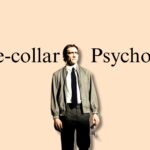
Monster is a fascinating anime that follows the story of a genius neurosurgeon Dr. Tenma and how his act of saving a young patient Johan Liebert alters the course of not just his own story but the story of many others. It is a unique anime that deals with the topic of nihilism in a multifaceted approach of storytelling.
This article will be discussing the antagonist of the show, Johan Liebert, an orphan whose kind and soft appearance belies a monster within. Johan is often characterized as one of the most evil characters to be ever featured in anime, often compared to morally complex characters like Light Yagami and even real-life tyrants like Adolf Hitler.
However, Johan’s evil is not easily apparent. As we will be seeing in my analysis of this character, Johan has philosophical depth which is hard not to appreciate. I have also analyzed his personality through the
So, let’s dive in!
The Beginnings of the Monster in Johan Liebert
There are two major events in Johan’s life which, I believe, psychologically traumatized him. Both occurred during two consecutive stages of his life and laid the foundations of the monster within. The reason I insist that trauma was the true breeding ground of the psychopathy within him is that before these two occurrences, he did not exhibit signs of any psychiatric disorder or problems with attachment.
Having said that, psychopathic traits are psychological elements. There is a clear philosophical rationale for why Johan commits such evil acts as shown or implied in the anime.
To put it discreetly, psychopathy (read more on psychopathy here) develops not only as a trait but as a personality as well and it interacts bidirectionally with his philosophy, maintaining a coherent evilness that is truly fascinating.
Is Johan Liebert a Psychopath?
There is a common question asked of the villain – is Johan Liebert a psychopath or sociopath (it is still astounding to me that such a loosely defined term as sociopath still exists in pop culture – but I digress).
Johan exhibits signs of a psychopathic personality.
He has committed crimes either by himself or through someone else. Moreover, he is highly manipulative – so manipulative that he convinces seemingly healthy individuals to commit suicide (e.g Richard Braun, the recovering alcoholic detective who was just about to meet his daughter) or murder their families. Emotionally, he is cold and ruthless, exhibiting callousness. However, Johan is not impulsive; he is calculating and deliberate.
The answer is that Johan appears to possess some traits of primary psychopathy. He exhibits charm and appears to have relatively lower levels of anxiety, along with some of the traits mentioned earlier.
| Criterion (A) | DSM-5-TR Description | Presence in Johan | Evidence / Interpretation |
|---|---|---|---|
| 1. Failure to conform to lawful behavior | Repeated acts grounds for arrest | ✅ | Multiple murders, orchestrating crimes, evading law enforcement |
| 2. Deceitfulness | Lying, aliases, manipulation for gain/pleasure | ✅ | Constant identity shifts, manipulation of individuals and systems |
| 3. Impulsivity / failure to plan ahead | Acting without foresight | ❌ | Johan is highly strategic, controlled, and long-term oriented |
| 4. Irritability / aggressiveness | Physical fights or assaults | ❌ | Violence is calculated, not driven by reactive aggression |
| 5. Reckless disregard for safety | Risk to self or others | ✅ | Willingness to orchestrate mass harm, disregard for human life |
| 6. Consistent irresponsibility | Failure to sustain work/financial obligations | ❌ | Functions adaptively when needed; not characteristically irresponsible |
| 7. Lack of remorse | Indifference or rationalization of harm | ✅ | Complete emotional detachment; no guilt, even after extreme harm |
Moving forward in this section, we’ll discuss the origins of Johan’s social psychopathy – or antisocial origins.
First stop – identity issues!
Johan’s Identification with His Sister, Nina Fortner
Firstly, the separation from his sister, back when Věra Černá, his mother, escaped from confinement. When in 1981, Franz Bonaparta came to where they were hiding, he asked Věra to choose which one of the siblings should go for experimentation in the Red Rose Mansion.
Věra first chose Johan but then chose Nina. Both twins at this point were dressed as girls – to hide the knowledge that Věra was the mother of two kids.
This confusion, seeing his twin who appeared much like him being confused – or perhaps chosen – over him at the early age of 5 or 6, was instrumental in the identity problems that Johan faces in the series.
However, I believe that the next traumatic event truly fractured Johan’s conception of attachment and who he was.
Does Johan have Split Personality/two personalities?
Extreme identification with a loved one can cause major issues in an individual’s personality. Due to this, we see the obvious monstrous side in Johan, and then a tender side to him as well. This might seem like two personalities, but really, they are two conflicting goals that Johan grapples: protecting his sister and erasing his own past (I’ll get to Johan’s goals later in this essay).
Hence, no, Johan does not have two different personalities.
The second major trauma Johan faced was the exit of his mother. For some time, Johan lived alone in the almost desolate room at The Three Frogs. His confusion with his sister was compounded by the uncertainty of a parental figure and the strange picture story of the The Nameless Monster – another character who Johan could identify with.
So, when Nina returned and told the story, Johan saw her as he probably saw himself; they were physically identical. Moreover, there is some indication that the separation from his mother could have resulted in depersonalization – as Johan removed his wig only after Nina returned.
Hence, Johan not only imprinted on but also identified with Nina.
The reason why I think this was a particularly traumatic time period for Johan was because of his reaction to re-reading the story of the nameless monster years later, at the Friedrich Emmanuel Library, University of Munich.
Why did Johan collapse/faint at the library after reading the book?
In Episode 33, “A Child’s View”, Johan reads the picture book The Nameless Monster, goes into a panicked state and collapses right between the aisles. This reaction is very uncharacteristic of him as he has remained composed even in life-threatening situations.
It does nevertheless seem like a very understandable trauma response to reading a text which he used to clutch on to when he was living alone, after his mother left, back at the three frogs building. It appears as if while reading the book – which he read far more than Nina – his assumption that he was there at the Red Rose Mansion was challenged. So far, he had thought that he was the one who witnessed the traumatic massacre at the mansion – which was objectively wrong.
But reading the book he was so familiar with and the memories of it returning seem to go against that.
How could Johan have remembered identifying with the book when he was at the Mansion?
This question breaks through Johan’s identification with his sister, laying bare the clear difference of experience between him and his sister. It is surprisingly common for people who have trauma bonded with others to construct memories. Dutch psychiatrist, Bessel van der Kolk mentions in his book, The Body Keeps Score, that autobiographical memories are particularly vulnerable to tempering when people share a traumatic incident (either having congenial or aggressor-victim roles).
Moving forward, there is another important factor that lays the foundation of psychopathy in Johan. It is the fact that there is nothing really to protect.
We’ll investigate that now.
The Nameless Monster Has No Home
Johan’s tumultuous but intense relationship with his family moved over many different locations – consider that Johan lived a contained life under Bonaparta, then lived under a contrived identity under his mother and, further still, burned the building where he lived in with his sister and ended up travelling across the country alone with her, all while he was possibly below the age of 10.
This negates the idea of a home being a place to feel safe in. Thus, a place that is not a home has no need for it to be protected.
Why does Johan Liebert kill his foster parents (the Lieberts, Springers and so on)?
Reason 1: Lack of Utility and Trust
The monster has nowhere to go.
This is why Johan Liebert ends up killing his foster parents and caretakers at the slightest chance that they might either betray him, or they could be a hinderance in his plans.
Take this for example:
Johan kills the Lieberts (the first Lieberts) the night Franz Bonaparta – the man Johan considers a monster as he was the cause of disintegration in his family – comes to see the twins. The Lieberts allowing Bonaparta to see the twins can be seen as a sign of betrayal of trust.
How could people who love the children they care for allow the monster who caused their children such suffering, within their house?
Or we can look at how Johan’s rationale for having the Springers killed was simply them not acting according to his conception of a true family (which simply seems as a way to manipulate Adolf Junkers into killing them). Another, perhaps the primary reason for having them killed was an attempt to erase the knowledge of Johan and his sister.
So, instead of the home being a place, Johan considers Nina as a home – the sole subject of his protection, softness and familiarity.
His bond with his sister increases, imprinting on her deeply. This is partly why Johan draws her, and she draws out Johan. Nina’s dissociation is equal parts based on her nervous system’s response to familiar stimuli being withdrawn from her life – by the person she herself has identified with the most in childhood, but also simply witnessing person who she fears deeply.
Reason 2: Impairment in attachment to Morality-based authority figures
If we take a psychosocial perspective on Johan’s moral development, we can observe seismic shifts in how his life as a dependent unfolded.
- Under Franz Bonaparta, the authority lay with Věra and Bonaparta
- At The Three Frogs, the authority lay with Věra primarily
- After the disappearance of Věra, the authority lay with Johan himself
Thus, the concept of ‘home’ and the ‘authority figures’ which usually form the pillars of the home are subjected to immense change. Instead of a home, or friends, Johan’s safe space is the presence of his sister.
And no one else.
This brings us to the second aspect of what makes Johan stand out among many well-written fictional characters. The second approach to understanding the monster within him.
What Makes Johan Truly Evil
Johan Liebert’s Weaponized Nihilism
He aligns people to him because he appears agreeable to them. He himself has gone through traumatic experiences thus he knows how to use trauma (for example when he convinces a young blond man, Edmund Fahren, to pretend to be Hans Schuwald’s son, instead of Karl).
He also convinces Miloş to go to the red-light district (one of the orphans taken in by the psychiatrist in Prague Mikhail Petrov– later killed by Johan) in order to find his mother. Johan probably had a good idea that the boy wouldn’t find his mother, this is why he created the perfect situation for a traumatic experience that would force the kid to consider suicide.
Johan also appears to be nihilistic in the sense that he recognizes there is no real meaning behind familial bonds except for the meaning one creates.
However, he makes this nihilism not as a way to enlighten people or think for themselves – rather he nudges people towards making a meaning that is negative rather than neutral. He does this by withdrawing support as soon as he believes his mission is done. He does this with the kid, he does this with his second set of foster parents in Munich (who falsely assumed that Johan was their son).
This could potentially point towards a splitting defense mechanism – especially how Johan splits between being a monster and a very humble, intelligent and kind young boy/man.
Roberto and Johan – Derived Evil vs True Evil
What makes Monster unique as an anime series is that it portrays different kinds of evil parallel to each other – philosophically distinct and in alliance and contrary at the same time.
In this vein, I’ve noticed some parallels in the story between Johan and Roberto. Roberto, one of the main antagonists of the series was at Kinderheim 511 at the same time as Wolfgang Grimmer – one of the protagonists. He was the nephew of Karel Ranke, the head of the Czech secret police. Unlike Grimmer, however, Roberto turned out to be far more callous – Grimmer appears to be saved from this indiscriminant callousness by the way of a more controlled defense mechanism (reaction formation) which allows him to behave violently only when he faces extreme danger.
Nevertheless, the difference between Johan and Roberto was that Roberto believed in a meaning to the hell that Johan envisioned – Johan, however said in the end that he will never be able to see it. Johan’s hell is primarily his existence and separation from the only home he had; his sister.
There is no way that Roberto, although having been brought up cruelly at Kinderheim 511, who was in awe of Johan (and thus found a meaning in his violence as something he committed for Johan) could truly empathize with Johan.
Take this into context:
Johan does not engage in self-preservative behaviors. He does not engage in sex. He does not argue with his victims over their fragility as people with conscience. There are almost no sadistic or hostile urges.
Instead, he relates to them – and he nudges them towards the conclusion that he himself arrives at.
This is starkly different from Roberto, who is far more brash, self-preservative, arrogant, sexually active and sadistic.
In other words, Johan’s evil is self-actualized while Roberto’s evil is organic and biologically contrived.
This is also what makes Johan far more charming as a villain – aside from his physical attractiveness. (Remember, there are positive aspects to psychopathy too).
As his sister repeatedly said, people who tried to use Johan to make their nefarious fantasies reality did not truly understand Johan. Thus, it could be said that throughout life, Johan never really met someone who considered him their equal.
Johan’s Isolation and Relationship with Tenma
I believe that the lack of empathy that Johan got – surrounded by people who either practically worshipped him or feared him is what drew him to people like Tenma, General Wolf and Nina – all of whom did realize the danger Johan posed but who were willing to face him or counter him despite it. This lack of empathy also meant that Johan felt isolated in his true self.
Interestingly, the same experience of ‘not being understood’ is something that Eren Yeager (from Attack on Titan) also went through – albeit he did not have the same level of apathy as Johan.
I am pointing towards how he chooses to be most intimately open about himself – about the monster inside him – through written texts on walls where he has been, rather than in person.
Another point is also very relevant with respect to what isolates Johan and draws him to Tenma.
Johan and Tenma are very similar in their philosophies
“He who sees too much ends up not fitting in anywhere.” – Freidrich Nietzche.
Johan holds Tenma’s philosophy, which is in stark contrast to most of the powerful men in the show, as an equal nemesis to his own.
He says this to Tenma towards the end of the show:
“Doctor Tenma. For you all lives are created equal, that’s why I came back to life. But you’ve finally come to realize it now, haven’t you? Only one thing is equal for all, and that is death.”
This is a nihilistic philosophy – but it is only half of it.
Interestingly, Tenma also operates on an existential understanding of life. He does not argue against the fact that people are born in different circumstances, that there are ranks which make the world unfair (he himself got very upset over being demoted from his position as the Head of Neurosurgery at the Eisler Memorial Hospital when he chose to operate on Johan rather than a celebrity).
However, Tenma chooses to be good despite of that. This is very apparent in how he views his role in society as helping save lives rather than to enjoy prestige or power for the sake of it (something which Nietzsche also prescribes in order to not become vengeful – accept the world as it is, but be open to different truths in the world).
In the end, Tenma saves Johan once again; demonstrating how his worldview is as strong – if not even more so – as a philosophy of life as Johan’s. The expression on Johan’s face when he wakes up shows his ‘defeat’ or ‘annoyance’ at this fact.
Another thing makes Tenma philosophically attractive to Johan is tied to a simple question – what does Johan want?
Does Johan Have a Mental Disorder?
Trauma can cause significant psychological dysfunction. It definitely did play a part in shaping Johan to be destructive towards society, both directly and indirectly. Trauma did seem to contribute to his possibly present disorder of antisocial personality disorder.
However, aside from that, there does not seem to be indication of depression or anxiety. There is, nevertheless, a possibility that Johan has Dissociative Identity Disorder, given how he conflates his sister’s memories for his own. DID is notoriously difficult to test for.
Since Johan identified with his sister and this eventually led to the confusion of his own memories with her’s, there is a possibility Johan also has DID. However, there is no long-lasting shift in personality states, which is characteristic of DID.
This does not mean that Johan had a split personality. Dissociative identity disorder indicates different personality states, not entire personalities.
What is Johan Liebert’s Goal?
Johan’s goal appears, at first glance, to be the erasure of his identity along with the people who affected his life in any major way. General Wolf, the man who found Johan at the border when he was just a child, remarks that everyone who knew his name (as Wolf) had died – attributing this to the presence of Johan.
By association (since he identifies with her immensely) this includes his sister, Nina. This is the reason why he kills the Fortner.
This is what it seems to be the most obvious philosophical reason.
However, philosophical reasons are often driven by psychological biases and lenses of the world.
Hence, the true goal of Johan seems to be to gain control of his life and seek complete closure with his past while doing it. Throughout much of his childhood and early adolescence, Johan was subjected to immense helplessness. His fate never truly seemed to be in his own hands, right from his birth which was itself the result of a eugenics experiment (conducted by the government to produce cognitively and physically optimized children).
The only way to truly to take control was to kill himself and the people who ‘created’ him.
In general, Johan’s kills (which numbered 109 in total) – based on the reason they were killed – fell under five categories. I have ordered them based on their importance in actually driving the killings:
- Curiosity
- Self-preservation
- To erase Johan’s past
- As a favor to a significant person
- Collateral damage
Curiosity and self-preservation seem to be the two major drivers of the killings. On one hand, Johan appears to be conducting an experiment to test waters and the limits of human morality and ability. On the other, he seems to be preserving his own identity – very paradoxical but ultimately understandable given how his goal appears to be ‘self-annihilation’.
Let’s see first how curiosity drives Johan to kill.
Satisfying Curiosity
How – and why – did Johan end up killing everyone at Kinderheim 511?
During his stay – and training – at 511 Kinderheim, Johan spread the rumor of the boy always kept on sleeping pills in order to be controlled, because he was that dangerous. This rumor helped in escalating tensions between the orphans at the orphanage and the staff (both administration and lower faculties).
When describing the reason why Johan did this, Hartmann theorized that Johan wanted to be the last person standing.
But why would Johan want to be the last person standing? There are very few signs of narcissistic thinking in his behaviors. Moreover, during episode 63 of Monster, the forensic psychologist, Dr. Rudi Gillen asks a serial killer what the motive behind Johan’s might be.
The killer says that the sentiment behind it was similar to toying with a line of ants. Or an act of curiosity driven by the understanding that Johan is more powerful than the person(s) he is toying with.
If this were to be understood as a possible motive, much of Johan’s actions which involve truly out of the box thinking to kill various people, can be explained.
Johan is curious what would happen if he plants seeds of doubt.
Annihilation of Johan’s own “World”
The highest number of kills appears to be driven by a desire to erase his own past. However, as it is hinted throughout the series (Johan points to his forehead often when someone attempts to kill him using a gun – beckoning the other person to shoot cleanly and fatally), he is always accepting of death.
Thus, Johan does not only want to erase his past – he wants to erase his ‘world’.
But what does it mean to erase one’s world?
Well, based on his actions, one can conclude that Johan wants to annihilate
- all of the significant people who know him deeply
- all of the places which he felt a deep emotional connection towards
- the people that these significant people know – which had any relation to him or his presence.
This explains why Johan burned down The Three Frogs. This also explains why Johan burned down the Red Rose Mansion. It explains most of the killings Johan did (including the Baby) or had someone else do it on his orders.
This makes Johan’s final plan egocentric but spanning across multiple worlds.
However, there is a deeper goal here which is more psychological rather than conscious in nature.
Self-Preservation
Self-preservation (the first Lieberts and possibly the unnamed couple near the Czech-German border when he and his sister escaped the Three Frogs) appeared to be the original cause of his killings.
However, given that Johan’s primary goal explicitly shown in the series is self-annihilation, how is it possible that he also desires self-preservation?
Due to his egocentric but highly weaponized-nihilistic view of the world – driven by the evils and curiosity of others – there is not a single point in the series where Johan experiences cognitive dissonance.
Except for when (it is implied) that he realizes that he conflated his own memories of the red rose mansion with his sister’s. This happened in the episode “I’m Home”.
Based on this, none of the things he had done up until then, with regards to his ‘plan’ truly seemed to be based on his own memories of the mansion. Right after that confrontation, his ‘plan’ seems to shift towards killing Franz Bonaparta and self-annihilation.
He wants things to go the way he planned. Even in death, he wants his philosophy to remain preserved. Now with the knowledge that his sister was the one who experienced the horrific incident at the Red Rose mansion, there is a very real possibility that Johan finally separated Nina from his own identity.
Now his goal was not that he and Nina should remain in the end.
Now, his goal was to make sure only he remained in his world and he would die alone (he no longer identified himself as Nina’s protector – as she had already experienced horrors he believed were his), preserving his identity as a nameless monster.
This, however, is a theory that fits and connects much of the ends of the philosophy of Johan but is not explicitly stated.
Self-preservation (this included Nina, as he identified her as a part of him) also was the reason why vengeance played a part. Again, not simply a bodily self-preservation, but also of his rationale and psychological architecture.
Did Johan kill out of vengeance?
Here’s why I think such cold and highly rationalized vengeance plays a role.
It is a fact that the people he killed had a role in his upbringing. He targets people within General Wolf’s organization (e.g Professor Goedelitz) however, he ends up killing only a few of them, eventually choosing to intimidate them by having the people around them killed first – as if to remove their safety to destabilize them psychologically.
This was the true way to reach closure that maintains Johan’s philosophy as well as personal experience.
Johan Liebert’s Personality Profile
Johan Liebert aligns most closely with an INTJ-A (“Architect”) profile, characterized by strategic thinking, internal focus, and decisive control. Looking at Johan this way helps describe how he thinks and operates. His introversion reflects a deeply internal world, often expressed through indirect communication like written messages rather than emotional exchange. His intuitive style drives abstract, pattern-based thinking, allowing him to view people as parts of a larger design. With a thinking preference, he prioritizes logic over empathy, using cognitive insight without emotional involvement. Finally, his judging and assertive traits contribute to his calculated, composed nature.
All of this results in a personality that is disturbingly coherent in its pursuit of proving meaninglessness to be the cornerstone of human life. I have explained Johan’s MBTI type in much more detail here.
Now let’s look at Johan’s personality through the lens of trait theory. I will specifically be using the scientifically robust Big Five model of personality.
Johan Liebert’s Personality Traits
Johan’s Superior Intellect, Creativity and Abstract Thinking
Firstly, Johan displays superior intellect. He is able to entertain multiple scenarios at the same time, displaying a much higher openness to experience than the rest of the population. When he identifies with his sister, his imagination is implied to be extremely vivid and realistic enough to delude him into thinking that he was the one who experienced her memories.
Moreover, he is able to hold his own in philosophical altercations with others. He engages with people of different philosophies so deeply that he affects their own mindset. Almost every person in the story who he comes into contact with experiences a major philosophical shift.
Johan’s Quiet Social Charisma and Extraversion
While I describe Johan as an introvert in the MBTI analysis, he really is much closer to an ambivert or minor extrovert. This is because he can be very sociable when the need arises. It is important to remember that the reason why Johan is a mystery is not because he does not socialize – rather, it’s because he actively erases his past after every major interaction.
The people who do come into contact with Johan do not usually describe him as quiet – they describe him as charismatic. Charisma is a trait which is a correlate of extraversion. Thus, in truth, Johan exhibits clear social skills. After all, the right-wing extremists seemed to adamant at making Johan Liebert their leader.
Moreover, he does meet with many people all over Germany – sometimes through aliases and sometimes as himself. This is more typical of an extrovert than an introvert.
Johan’s Work Ethic and Deliberation
While disappearing suddenly, Johan acts in quick and deliberate fashion. His relentless style of striking while the iron is hot is an example of higher-than-average degree of deliberation. There are also no moments in the show where Johan acts impulsively. Much of his actions have a lot of strategic planning and deliberation behind them.
Take, for example, Johan’s pursuit of Detective Jan Suk to get information about the Three Frogs inn. He basically cross-dresses and manages to hoodwink an actual law enforcement official – to Suk’s support, he had only started the job and he was drunk. Johan also was a model orphan at Kinderheim 511, and had – most probably – training in multiple languages.
Again, this indicates a high level of conscientiousness.
Johan’s Affinity to Emotional Coldness, Faking Altruism and Manipulation
Many people that Johan influenced stated that he appeared warm and even altruistic to them. For example, the second Liebert couple were won over by Johan’s offer to replace their dead child’s place.
However, this was faked. His behavior is more manipulative than genuine, showing very low degrees of altruism and straightforwardness (sub-traits of agreeableness). Johan seems to be more emotionally cold than tender-minded. For example, he manipulates children as well as adults. This exhibits a very high degree of emotional coldness.
Johan’s Variable Emotional Stability
There are very few instances in Monster that show Johan is emotionally unstable. In fact, the only point where he becomes unstable is in the library. While I am tempted to conclude that Johan is completely emotionally regulated, the scene at the library shows a deeply unstable core to his philosophy. And this core does in fact lead to high feelings of hostility towards others (a major feature of neuroticism).
Having said that, Johan Liebert exhibits almost no other signs of depression, anxiety or even vulnerability to stress. Thus, classically he might be seen as stable. However, I believe that this stability is largely cognitively based.
In some ways, Johan is masking his emotional side by deliberating and moving forward. This is strikingly similar to Eren Yeager’s solution to dealing with trauma. But Johan is much less impulsive and probably less aware of how traumatic his upbringing truly was.
In Conclusion
Johan Liebert ultimately resists any single label because his violence is not the expression of impulsivity, sadism, or emotional chaos, but of a coherent inner architecture shaped by trauma, curiosity, and philosophical negation.
His early rupture of attachment dismantled the possibility of home as a stable place, redirecting his sense of belonging into abstraction and control. From this foundation emerged a form of nihilism that is not passive or resigned, but active and experimental — one that tests the fragility of identity, meaning, and moral belief through carefully constructed situations.
Johan’s apparent calm and charisma are not signs of inner emptiness alone, but of a cognitive style that privileges prediction, confirmation, and epistemic power over relational engagement. What makes him particularly unsettling is not that he kills, but that he observes: people are positioned, support is withdrawn, and outcomes are allowed to unfold as if they were proofs rather than tragedies. In this sense, Johan is less a monster defined by cruelty than a figure defined by unfinished development — an intelligence untempered by moral maturation, curiosity severed from care, and meaning stripped of responsibility.
His terror lies not in chaos, but in coherence, forcing the unsettling recognition that when curiosity is left unbounded by empathy, it can become indistinguishable from annihilation.

I am a Clinical Psychologist and a Lecturer of Psychology at Government College, Renala Khurd. Currently, I teach undergraduate students in the morning and practice psychotherapy later in the day. On the side, I conjointly run Psychologus and write regularly on topics related to psychology, business and philosophy. I enjoy practicing and provide consultation for mental disorders, organizational problems, social issues and marketing strategies.
- M Abdullah Qureshi

- M Abdullah Qureshi

- M Abdullah Qureshi

- M Abdullah Qureshi