
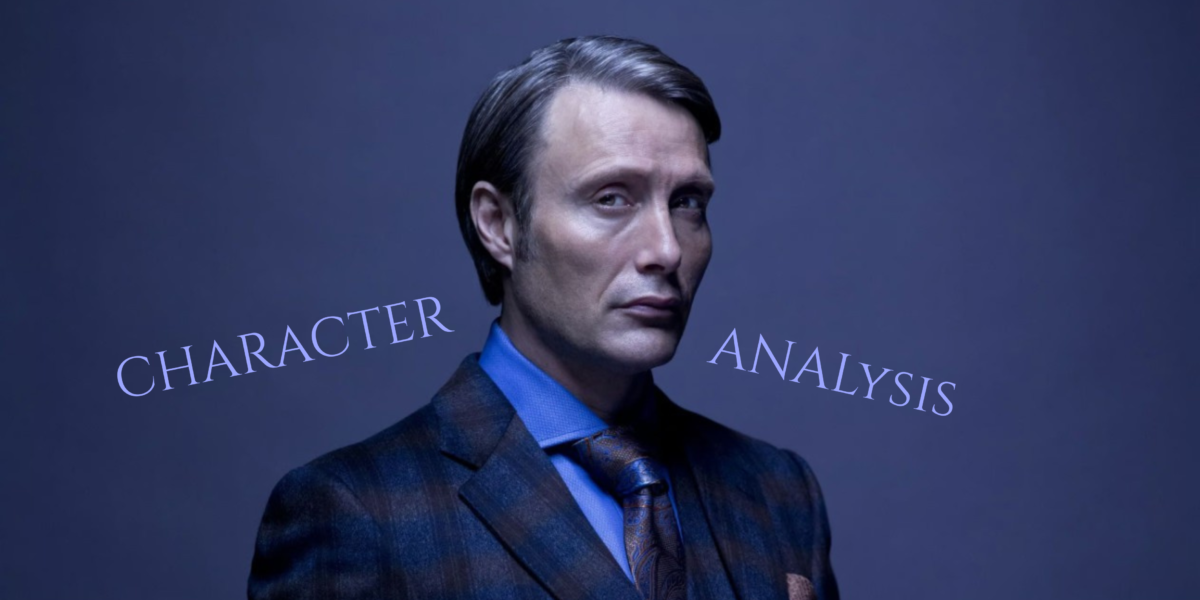
Hannibal Lecter is one of the most famous depictions of a serial killer in popular culture. Born from Thomas Harris’s 1981 novel, The Red Dragon, Hannibal is an intelligent individual who engages in serial murders and cannibalism. However, instead of being uncouth or savage, he is a polite, well-mannered and esteemed psychiatrist renowned in higher academic and medical circles. Despite his own criminal acts, Hannibal also helps in FBI investigations of other serial killers.
While there are more than a few depictions of Hannibal, we will be focusing primarily on the portrayal of the TV series Hannibal that ran from 2013-2015, where the cannibal is portrayed in a relatively younger and more modern age.
In this character analysis, we will be discussing his personality and character traits as well as his psychological make-up including his drives, motivations and values.
So, let’s begin dissecting Dr. Lecter’s psyche!
Personality Profile of Hannibal Lecter
Before we go on to the more robust personality analysis, let’s first take a look at his MBTI type to gather an introduction.
Hannibal Lecter’s MBTI Type: ENTJ
Hannibal Lecter’s personality in Hannibal aligns most closely with the ENTJ type, characterized by a dominant use of Extraverted Thinking (Te), supported by Introverted Intuition (Ni). His behavior consistently reflects a preference for external control, structured execution, and the deliberate shaping of outcomes. Rather than remaining a passive observer, Hannibal actively constructs situations that influence others, using his environment very adaptively as a medium through which he imposes order and realizes his intentions.
This strategic execution is guided by a strong intuitive framework. Hannibal demonstrates an acute ability to perceive underlying patterns, anticipate behavior, and conceptualize transformation – particularly evident in how he engages with Will Graham, whom he views not merely as he is, but as what he could become. Unlike more internally focused types, however, Hannibal does not stop at insight; he translates vision into action.
His pronounced engagement with sensory experience – through refined cuisine, art, and the physicality of his actions (he even smells Will and Bella without trying to hide it) – further supports the presence of Extraverted Sensing (Se), while his deeply personal yet unconventional moral code reflects an inferior but influential Introverted Feeling (Fi). This manifests in selective attachment, rigid internal values, and a belief in authenticity that often overrides conventional ethics.
While he shares certain traits with Introverted Intuitive types, Hannibal’s consistent pattern of external engagement, social orchestration, and real-time manipulation of events strongly supports an ENTJ classification. He does not merely understand systems – he operates within them, reshapes them, and ultimately uses them to enforce his vision of order, identity, and transformation. Instead of someone like Thomas Shelby, Hannibal has almost no problem getting out of a bind in very novel situations simply based on psychological leverage.
Now, let’s move on to the personality analysis through empirical Big Five Model of Personality.
Hannibal Lecter’s Big Five Personality Traits
Openness to Experience
Hannibal is high in openness to experience. His professional endeavors, such as neurosurgery and psychiatry in the United States and then professorship in Florence all entail a highly adventurous personality. He also entertains different perspectives in psychotherapy and enjoys intellectual conversations on abstract topics, indicating significant intellectual curiosity. Hannibal shows signs of being highly aesthetic; his aesthetic sense is elaborate, shown in not just the colors of his suits and clothes but also the grandness of his office, his habits of drawing and playing the cello. Lecter is also extremely aware of his own and others’ emotional depth which allows him control over social interactions without personal cost.
He further has a very vivid imagination, a facet of openness to experience, as can be seen in his photographic memory and also his pursuance of Will along with his ability to anticipate probable future actions.
For example, he deduces with certainty that inspector Rinaldo Pazzi did not actually go to the police and instead tried to sell him out simply based on the fact that he had not yet been arrested.
While there are no indications of Hannibal’s political beliefs in the series, he does seem to be a non-conformist, belying a very open value-system. He outrightly conducts and admits to conduct unorthodox methods of psychotherapy. Moreover, his acts of cannibalism are an example of extreme non-conformity!
Conscientiousness
Hannibal is moderately high in conscientiousness. For one, he seems to have a clear preference for orderliness. Lecter’s office is neat, his ledger is maintained properly, along with records of his patients and he has a well-set and maintained routine. Moreover, as is shown in his careful planning, he has very high control over his impulses; there has almost never been a point within the series that Hannibal ‘lost control’ of his emotions. Every act is deliberated on – decided rather than left up to impulses. Thus, he is quite high on self-discipline and cautiousness.
Similarly, consider that Hannibal not only managed a busy routine involving highly skilled work along with his criminal acts but only got caught after months of being clearly called a criminal. This shows a clear abundance of competence.
However, there does seem to be a very slight drop in achievement seeking – if we are to strictly look at achievement seeking as ambition. Pursuing neurosurgery and then psychiatry is not an easy task by any stretch of the imagination but, given Hannibal’s photographic memory and very high intellect, there is a possibility that he might have achieved much more. This also is where the crack in his moral compass could be seen in a way which perhaps he does not intend – Hannibal prefers aesthetic appeal and ‘quiet growth’ to ambition. It has its benefit, to be fair; he is able to maintain his lifestyle without being too notable.
Having said that, to Hannibal ambition is bent towards aesthetic progress rather than conventionally societal standards of success – which he has already mastered.
Another domain where Dr. Lecter could be seen moderate in is dutifulness. Hannibal does conduct his appointments dutifully and he is shown to feel a high level of responsibility for Abigail and Will. However, this is conditional – he forsakes both when they don’t serve their role. Most strikingly, he is especially casually indifferent towards Bedelia Du Maurier, his own therapist who he supposedly marries in season 3.
Agreeableness
Hannibal is significantly low in agreeableness. While he entertains different ideals, he holds his own ideals above others. He is also highly manipulative and does not trust others unless he holds deep emotions AND regard for them – and even then, he manipulates the other person. Interestingly, Hannibal is moderately low in tender-mindedness. His interactions with Abigail and Will Graham show this where he acts almost as a father figure, mentor or lover. He is also very partial towards Bella and saves her life out of regard for someone he considered a friend, Jack Crawford. Thus, it could be said that Hannibal is moderately high in empathy.
Hannibal is also low in compliance, this he shows in full display when he was imprisoned; he manages to communicate with the red dragon. After being caught in this communication and forced to do Alana Bloom and Crawford’s bidding, he still defies them by making Francis Dolarhyde aware that they were listening in on his and Hannibal’s private conversation.
Neuroticism
Hannibal is low in neuroticism as well. I would venture to say the only facet he is moderately low in (as opposed to extremely low) is angry/hostility. Hannibal makes his hostility known, not just by killing and people, but also by giving snide remarks and maiming certain individuals and/or controlling them through psychological means. Other than this Hannibal has very low neuroticism. He does not exhibit signs of anxiety and depression. And even when it is implied, he is able to recover quite early. He also has low impulsivity and can handle stress quite well. It often seems as if his emotional regulation is extremely strong, not allowing much things to slip into his armor – other than the ones that anger or disgust him.
Explaining Hannibal’s Psychology
Hannibal’s Affinity for Disgust
Hannibal has a penchant for being disgusted by certain behaviors. During various instances, whenever someone is causing him or his possessions disrespect, Hannibal shows disgust.
Some key examples come to mind.
- Franklyn Froideveaux putting his used tissue paper on the clean table,
- Mason Verger cutting open Hannibal’s office sofa and then telling him to just send the bill,
- Alana Bloom removing his books, his paintings and his toilet from his prison cell.
Two of these examples involve Hannibal developing a markedly negative bias to the objects of his disgust. This indicates a certain level of disgust-sensitivity. Disgust sensitivity is a trait found in many authoritarian figures as well as narcissists. Research does show that narcissists are more likely to experience higher disgust sensitivity from their partners.
But what is Hannibal disgusted by?
Hannibal’s Aversion to Indignity
One of Hannibal Lecter’s key characteristics is that he does not like indignity as a central trait or quality of one’s overall behavior.
However, Hannibal’s response to indignity varies significantly based on the degree to which he is affected.
One important thing to keep in mind here is that Lecter, much like Johan Liebert, killed by proxy.
So, for example, those who outrightly disrespect him were killed and/or eaten either directly or indirectly. These include the physician who chided him directly (in one of the flashbacks of season 1) and Abel Gideon, who assumed the identity of the Chesapeake Ripper (to Hannibal, it seems that false ownership is also an act of indignity).
Secondly, those who did little disrespect to his personal self were maimed. An example comes to mind of Mason Verger, who Lecter drugged and who eventually fed his own face to Will Graham’s dogs.
The last tier of indignity consisted of those who simply showed signs of indignity unintentionally. This was the case with Franklyn and Freddy Lounds. These individuals were confronted more verbally than physically and earned a scoff. They were considered expendable but not pursued as actual targets of cannibalism.
At this point it is a good idea to touch upon a very central question.
Why does Hannibal eat people?
In the novels and the movie Hannibal Rising, it has been stated that nazi occupiers killed and ate Mischa, Hannibal’s sister. Thus, there is a likelihood that this made Hannibal aware of his lack of agency, for which he overcompensated by learning how to fight, pursuing neurosurgery as a profession and then choosing psychiatry (switching careers).
However, in the series, in one of the post episodes of season 3, Mads Mikkelson (the actor playing Hannibal) states that Hannibal found the man Chiyoh was keeping captive, killing and assaulting Mischa. Hannibal ate his sister (much like Garret Jacob Hobbs did to his victims), trying to keep her close to him.
On the other hand, other victims of Hannibal were eaten for intimate reasons as well – but not out of a desire to keep them close to himself.
So, here are two of the major reasons why Hannibal was a cannibal.
Hannibal Engaged in Cannibalism out of Love and an Act of Sadism
The sentiment to utilitize – and thus honor – a victim fully is a quite striking resemblance to Garret Jacob Hobbs (Abigail’s father) who also ate his victims or used various body parts to make household artifacts as a way to honor them. Hannibal differs only slightly in his act of eating Mischa – he cannibalizes her but does not use body parts as ornaments. Plus, he only does this after she has died at the hands of another person.
Thus, Hannibal’s reasons for killing are often externalized, where he shifts the blame of dying of the person on the other person, and not on himself.
This makes his killings impersonal and cold – Will gave clear remarks on this when he compared the killings of the ‘copycat’ (Hannibal) of Garret Jacob Gobbs.
Within the series, his sister is only of the first two relationships which Hannibal admittedly felt deeply for (the second one was with Will Graham). These are markedly the only two people (explicitly shown) who Hannibal intended to eat out of love, not cold malice.
Some might claim that the reason Hannibal ate his victims was sadism. However, I would argue it was more out of utility than deriving pleasure or gratification. Killing could sometimes be an act of sadism – but, not eating the victims.
Next there is the concept of love in Hannibal’s life.
Hannibal Lecter’s Concept of Love
There is enough evidence to suggest that there had never been a point where Hannibal loved someone more than himself, other than earlier in his life, in the case of Mischa.
Thus, it will do well if we touch upon narcissism first in this section.
Hannibal Lecter’s Narcissism and its Relation to His Intimacy
Having lived a largely solitary childhood, it is understandable that Hannibal must have felt a degree of separation from others in a world which had so outrightly claimed to be hostile. His major sources of emotional comfort seemed to be aesthetic ones rather than positive human regard. Combine childhood trauma with superior intellect and aestheticism, one might get a whiff of thoughts of grandeur in the product child as an escape.
The fact that he ate the only person he truly felt something for at that point could make Hannibal think that he was the one who is the person who lasts in a relationship. This predisposes himself as bearing most of the burden of loving relationships – he was the one who survived, he was the one who had to protect someone else. And thus, it also leads to a sense of entitlement towards the other person; as if the other had to constantly prove themselves to be worthy of being an equal in the relationship.
This is why he keeps on testing Will Graham to see whether Will responds with the same love that Hannibal ‘bestows’ on him. And when Will fails, he often tries to either kill Will or eat him (after Chiyoh shot Will as he was about to kill Hannibal in Florence with a knife).
The eating part is almost like him eating Mischa, except that this time it seems to be more charged by anger than simply melancholy.
So, entitlement to claim others’ life in intimacy seems to be Hannibal’s brand of narcissism.
Let us now explore some supporting characteristics of Hannibal which make him a dynamic character.
Hannibal’s Manipulative Behavior as Action to Gain External Control
Hannibal prefers lived experience to simply just watching things unfold. This is why he is incredibly active in manipulating people not just on a personal level but creating events in order to shift the tides. He lures Will to Florence by killing and shaping the corpse of a man into a heart, leaving it up for public display, knowing that Will would be drawn to it. He also prepares feasts in attempts to pull himself up by the bootstraps when he has worked himself into a mental block – when Will gets caught in season 2.
In both these cases, Hannibal’s desire to gain external control to manage internal feelings is apparent. In neither of them does he act to place the responsibility of his own internal state on the other person – this shows a key characteristic.
Manipulation is used for both internal and external control whereas outright violence is used for final judgment.
So, manipulation is simply a means to an end – and it is used for only those individuals who Hannibal thinks of as key players – not for people who are insignificant to him.
For example, Hannibal does very little to manipulate Fredrick Chilton.
Manipulation as a Method of Control in Love
Hannibal clearly states that he got caught only so that Will would know exactly where he is. This by default induces temptation in Hannibal’s love object. Hannibal’s desire to possess Will also shows up in him repeatedly using Will’s own love objects as bait.
For example, his continual usage of Abigail as both reward and punishment. He presents Abigail to Will as a reward of what could have been if Will had decided to stay with Hannibal and then kills her almost as a sort of punishment. Another example is of Will’s family – who he purposely gets endangered by the red dragon.
This goes back to Hannibal’s strategic usage of both softer manipulation and using outright violence as signifiers of the stake involved in forming an intimate relationship with him. It shows a very important behavioral pattern of Hannibal; he induces trauma, both physically and psychologically, to express disappointment.
Hannibal’s Affinity for Aesthetics and Prowess
In the series, it is mentioned that after his sister was killed, Hannibal was raised under his uncle and aunt who exposed him to art and cooking. As a clinician myself, I would venture to say that this was extremely important in aligning Lecter’s mindset to appreciate culinary and aesthetic arts as a sort of comfort or respite from horrors of life.
This is understandable as that portion of his life where he admired art and cooking and drawing came after his traumatic early to middle childhood.
However, one cannot ignore that Hannibal Lecter has high trait openness. His photographic memory and ability to marry a concept such as cannibalism to intimacy (as was seen with him eating his sister) is an example of that. With the right tools, Hannibal’s predisposition had enough means to grow and be cultivated.
He is also said to be of excellent character and reputation, something that he curated through the years – in some ways reconstructing himself. This reconstruction also could be said as cognitive restructuring, albeit in a very morbid way, which probably became a motivating factor in him ultimately choosing psychiatry as his mainstay profession. Cooking and drawing also predisposed him to proficiency in neurosurgery, however psychiatry allows better apparent exercise of power (while allowing him to somehow muddy the waters in case of ‘mishaps’ – something not possible in neurosurgery).
Hannibal’s Admiration for Self-Actualization
Hannibal also exhibits a core belief – the more one understands and materializes their potential, the more valuable they are as a person.
In the absence of a society based moral compass, this central belief does end up encouraging behaviors and traits that might be antisocial but the ones that involve a great degree of self-integration. Hannibal encourages his patients to explore themselves and make aware their unconscious biases which could lead to certain dangerous actions.
For example, he encourages Margot Verger to kill her brother Mason – suggesting this much earlier before Mason sterilized her. He also notably admires Francis Dolarhyde and Randall Tier.
However, he much prefers Francis over Randall – simply based on how complete their transformation really is.
Randall based his personal prowess over a suit that he created – admirable but ultimately incomplete philosophically which is why he failed far more easily than Francis; Dolarhyde did not rely on props in the exhibition of his personal strength or philosophy. In fact, Dolarhyde consumed the drawing of the Red Dragon and had its tattoo etched on his skin – a large step above Randall Tier’s bear suit.
Apparently, Hannibal appreciated this more organic transformation.
What Disorder does Hannibal Lecter have?
Two personality disorders come straight to mind when I think of Hannibal:
- Antisocial Personality Disorder, and
- Narcissistic Personality Disorder
Is Hannibal Lecter a Psychopath?
Despite my personal fascination with the character, Hannibal is an extremely unusual psychopath. Firstly, he is very high in conscientiousness – something that does not usually occur in psychopathy. He has almost complete control over his emotions and does not slip up. Secondly, he is quite self-aware and shows genuine signs of emotional empathy. Normally, both emotional and cognitive empathy are negatively associated with psychopathy in offenders.
Moreover, Lecter does not let up even when he is alone.
Thus, even though Hannibal has clear signs of psychopathy, I do not see some of the associated emotional signs of psychopathy. In this case, he is highly similar to Johan Liebert – a perfect ‘monster’ of a human being.
Is Hannibal Lecter a Narcissist?
Much like the case with psychopathy, Hannibal’s narcissism is very peculiar as well. There are sure-fire signs of empathy and there seem to be almost no indication – even after being caught – that Lecter has delusions of grandeur (more common in grandiose narcissism). His exaggerated negative response to high levels of indignity is the only true symptom that links him to narcissism – if we go with the diagnostic criteria in the DSM.
The core belief ‘my opinion holds more weight than yours’ also seems to be grounded in reality. This belief does not seem to originate from malice since Lecter does not get angry or defensive at any point in the show.
To the show’s credit (and probably discredit), Hannibal is extremely hard to catch or think of as a narcissistic psychopath because there are no indications of psychological disorder other than his criminal acts.
Having said that, during some points of the show Hannibal compares himself and Will to ‘God’. This could be an indication that Hannibal’s narcissism is dualistic; he does hold himself in perhaps the highest esteem but he is wholeheartedly willing to share that esteem with the person he ‘loves’ – should that person conform to his aesthetic appeal of self-integration.
Conclusion
Hannibal Lecter is a riveting portrayal of a narcissistic psychopath who is charming, highly intelligent and extremely macabre. The concept of cannibalism in itself is a controversial one but its pairing with an unusual brand of psychopathy in a distinguished gentleman makes it fascinating and even frustrating (how he gets away with almost every criminal act).
His personality reflects the convergence of early trauma, exceptional intelligence, aesthetic refinement, and a deeply internalized philosophy that equates human worth with the realization of one’s fullest potential. In Hannibal’s worldview, repression is weakness, conformity is mediocrity, and morality is valuable only insofar as it serves authenticity and refinement.
This philosophy underlies every major aspect of his behavior. His manipulation of others is not solely for amusement but for authorship – an attempt to shape people into more realized versions of themselves, often according to his own disturbing standards. His violence is not impulsive but ideological, aesthetic, and often symbolic. His cannibalism is not reducible to hunger or sadism, but functions as a complex expression of domination, intimacy, punishment, and incorporation.
Even his capacity for love remains filtered through this same framework: he does not seek connection through mutual vulnerability, but through transformation, possession, and the elimination of separateness.
What makes Hannibal particularly compelling as a character is that he is not driven by chaos, madness, or simple bloodlust. He is methodical, self-aware, emotionally regulated, and philosophically coherent. His brutality emerges not from inner fragmentation, but from the frightening degree to which he is psychologically whole within his own value system.
Hannibal does not kill because he lacks control over himself; he kills because his control is so absolute that he believes himself entitled to decide who is worthy of transformation, punishment, preservation, or consumption.
Ultimately, Hannibal Lecter represents the terrifying possibility of a fully self-actualized individual whose values have become untethered from collective morality. He is a man who has integrated his intellect, appetites, trauma, and ideals into a singular and coherent identity – one so refined and internally consistent that it becomes monstrous. In this sense, Hannibal’s horror lies not merely in what he does, but in how completely he understands and accepts himself while doing it.

I am a Clinical Psychologist and a Lecturer of Psychology at Government College, Renala Khurd. Currently, I teach undergraduate students in the morning and practice psychotherapy later in the day. On the side, I conjointly run Psychologus and write regularly on topics related to psychology, business and philosophy. I enjoy practicing and provide consultation for mental disorders, organizational problems, social issues and marketing strategies.
